How to glue plastic for a lasting bond
Most household plastics can be repaired with super glue in seconds. The type of plastic and a clean bonding surface make all the difference.
Which plastic is it?
Many parts have an abbreviation or recycling code, usually on the inside. This tells you whether super glue is a good choice.
| Plastic | Typical parts | With super glue |
|---|---|---|
| ABS | Housings, toys, interior car parts | Good |
| PVC (rigid) | Pipes, profiles, cable ducts | Good |
| Polystyrene (PS) | Model making, packaging | Good |
| Acrylic (PMMA) | Panels, displays | Good, use sparingly |
| Polycarbonate (PC) | Covers, glasses | Good |
| PLA, PETG | 3D-printed parts | Good |
| PE, PP | Buckets, canisters, containers | Poor |
| PTFE, silicone | Coatings, seals | Poor |
PE and PP feel slightly waxy. Super glue has very little grip on this smooth surface.
Glue plastic in four steps
- Clean. The surfaces must be clean, dry and free of grease. Isopropyl alcohol works well; even fingerprints can interfere with bonding.
- Roughen. Lightly sand smooth surfaces with fine sandpaper and remove the dust.
- Apply a thin layer. Apply a thin film to one side. Too much glue slows curing and weakens the joint.
- Press together. Align the parts precisely and press them firmly together for a few seconds. Super glue generally reaches full strength after a few hours.
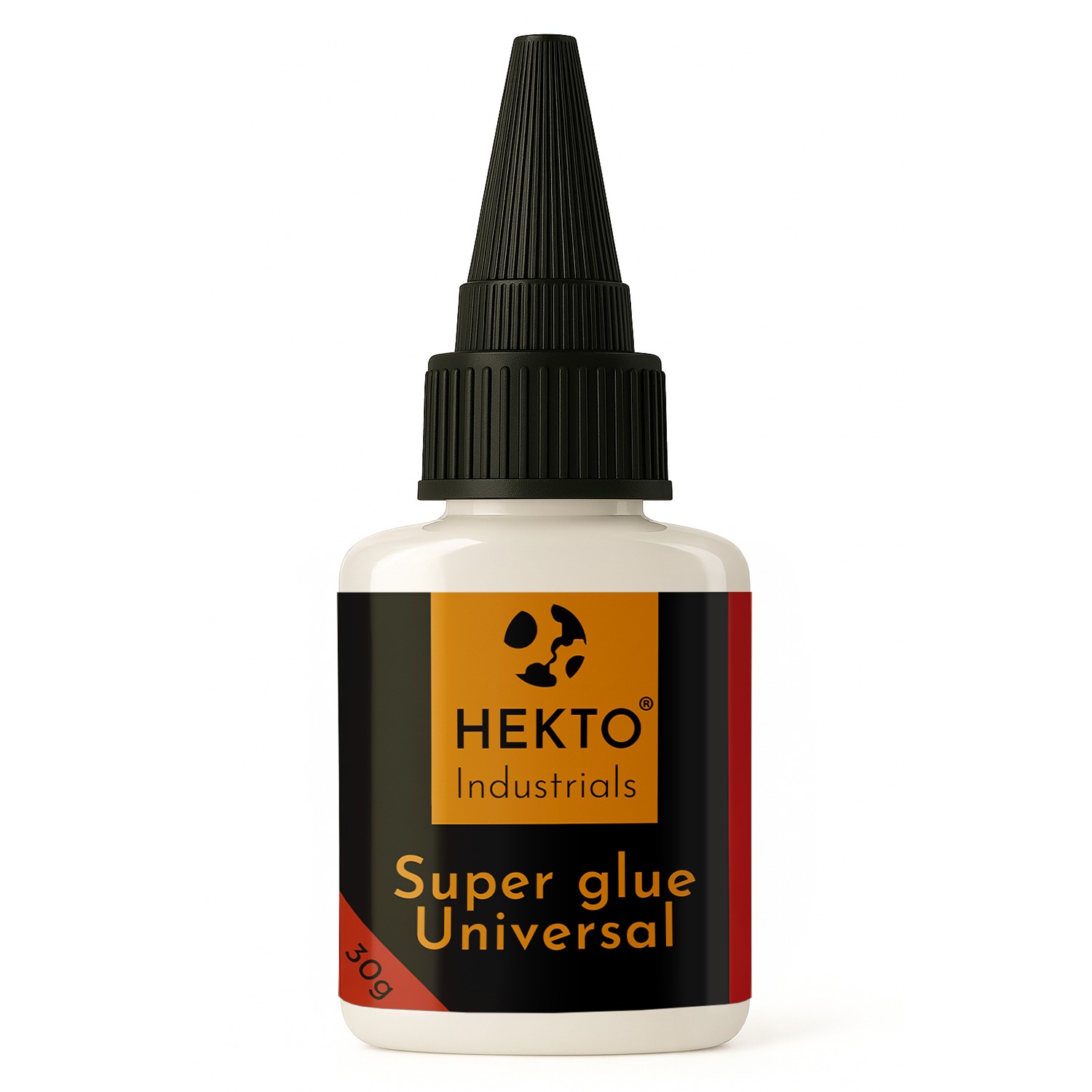
Super Glue Universal 30 g
Thin and liquid, flows into cracks on its own, with a needle closure to prevent drying out.
View on AmazonWhen a piece is missing or a gap remains
Super glue joins two surfaces that fit together precisely. If material is missing, for example from a broken mounting bracket, fill the area with granulate and drip glue onto it. The combined material hardens in seconds and can be sanded, drilled and painted. See the guide to filling cracks and holes for instructions.
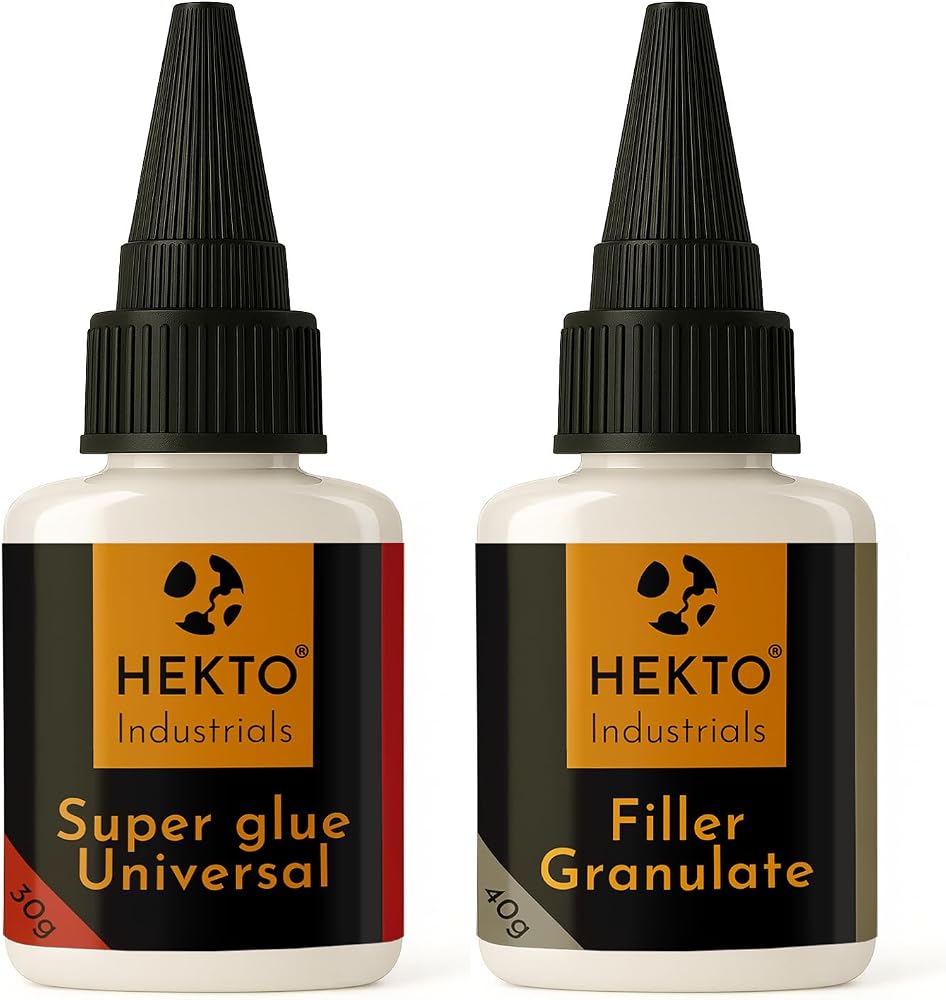
2K Adhesive Set XXL 70 g
30 g of super glue and 40 g of granulate. Fills up to 10 mm per application.
View on AmazonCommon mistakes
- Too much glue. A thin film gives the best bond.
- Greasy surfaces. Release agents, oil and skin oils prevent adhesion.
- Putting the bond under load too soon. The parts hold after seconds, but full strength takes longer.
- White haze. This is caused by too much glue and poor ventilation. Use glue sparingly and ensure airflow.
Frequently asked questions
Which glue works best on plastic?
For hard plastics such as ABS, PVC, polystyrene and acrylic, thin cyanoacrylate super glue is a fast, strong solution.
Why doesn't super glue work on every plastic?
Polyethylene, polypropylene, PTFE and silicone have very smooth, non-stick surfaces. Super glue barely adheres to them.
Do I need to sand plastic before gluing it?
Yes, for smooth surfaces. Lightly roughening them with fine sandpaper increases the surface area and improves adhesion.